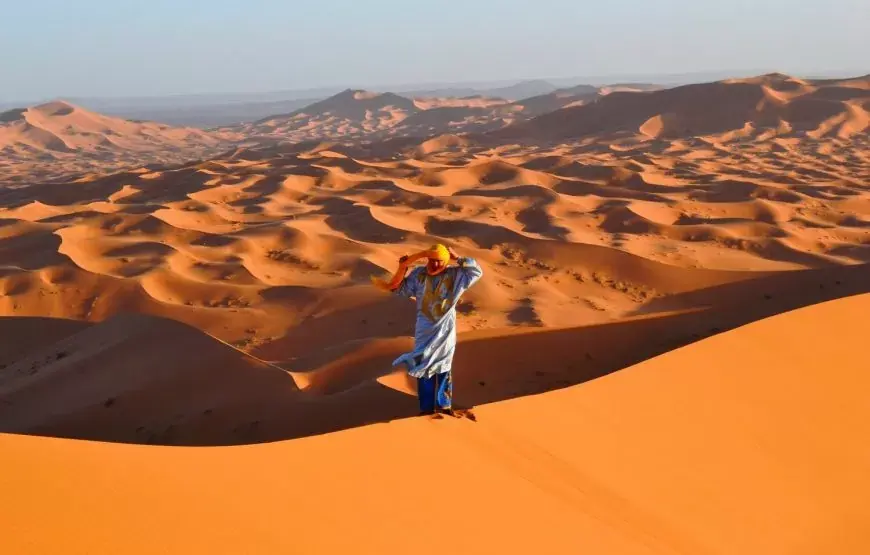
The single thing first-timers get wrong about the Sahara is temperature.
Hot days, genuinely cold nights. Pack for both and you'll be
comfortable; pack only for the heat and you'll shiver at the campfire. After a
decade of sending travellers into the dunes, here's the packing list we actually
give our guests — nothing more, nothing missing.
Clothing: layers, always
- Light, loose long sleeves and trousers — better than shorts against sun and blowing sand. Cotton or linen breathes best.
- A warm layer — a fleece or light down jacket for after sunset. Essential year-round, non-negotiable in winter.
- A scarf or shemagh — for sun, wind and the occasional sand gust on the camel trek. We can show you how to wrap it.
- A swimsuit if your tour includes a pool stop or the coast on the way back.
Shoes
Closed trainers or light hiking shoes for the drive, the
gorges and walking, plus sandals or flip-flops for the soft
sand at camp. Skip sandals on the camel trek itself — closed shoes are
more comfortable with the stirrups and warm sand.
Sun & sand protection
- High-SPF sunscreen and lip balm with SPF — the desert sun is relentless even in cooler months.
- Sunglasses — ideally wraparound, for wind and glare.
- A wide-brim hat for the daytime stops.
- A small dry bag or zip pouch to keep fine sand out of your camera and phone.
The small things people forget
- A power bank — camps have limited or solar electricity.
- A headtorch — far more useful than a phone light around camp.
- Cash in dirhams — for tips, souvenirs and small village stops; cards aren't accepted in the desert.
- Any personal medication, plus basic stomach and headache remedies.
- Wet wipes / hand sanitiser for the road.
What you don't need to bring
You don't need a sleeping bag, tent or cooking gear. Our
3-day Marrakech to Merzouga desert tour
includes beds, bedding, blankets and all meals at the camp — in winter we
add extra wool blankets and a stove. Travel light: a soft duffel or backpack is
easier in the vehicle than a hard suitcase.
Pack for the season you're travelling
Summer leans toward sun protection and hydration; winter toward warm layers for
the night. Time your trip with our
best time to visit the Sahara guide,
and if you're driving the route from Marrakech, see exactly where you'll stop in
our Marrakech to Merzouga route guide.
Frequently asked questions
What should I wear in the Sahara desert?
Light, loose, breathable layers for the day and a warm layer for the night. Long sleeves and trousers beat shorts for sun and sand. A scarf is genuinely useful.
Is it cold at night in the Sahara?
Yes. Spring/autumn nights fall to 10–14 °C and winter nights near freezing. Even summer cools off — always bring a warm layer.
What shoes should I wear?
Closed trainers or light hiking shoes for walking, plus sandals for the soft camp sand. Closed shoes are best on the camel trek.
Do I need a sleeping bag?
No — our camps provide beds, blankets and bedding. Just bring your own warm layers for the evening.
Got your list ready? Browse our Sahara
tours from Marrakech, or request a quote
and we'll send a day-by-day itinerary plus a tailored packing note for your dates.
 Local Morocco Tours — Home
 By
By